

Flying from Dubai? AI scanners will let you keep laptops and liquids inside bags
More than 100 hand-luggage screening machines are being upgraded across DXB
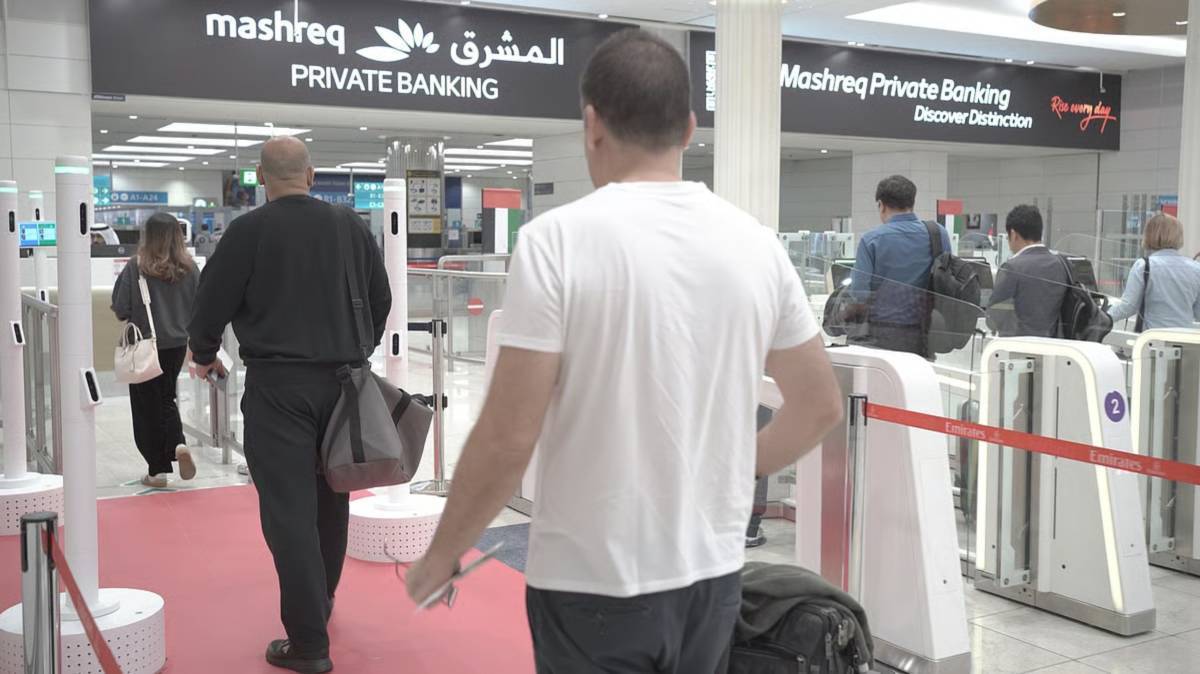
DUBAI – The Dubai International Airport is rolling out advanced security scanners that could transform one of the most time-consuming parts of the passenger journey.
Travellers using the new equipment will be able to leave laptops and liquids inside their hand luggage during screening. They will also no longer need to remove their shoes and belts where the upgraded security process is in operation.
The technology is being introduced as Dubai Airports invests heavily in upgrading security infrastructure across Dubai International Airport (DXB), with more than 100 hand-luggage screening machines being replaced or upgraded during 2026.
Dubai Airports chief executive Paul Griffiths said the new equipment is already being installed, with around five or six machines operational as the wider programme progresses.
Faster screening
The new scanners use high-resolution 3D imaging to examine the contents of hand luggage without passengers having to unpack individual items. Artificial intelligence will also be used to assess bags and identify those that require further investigation.
This means security teams can focus attention on bags flagged for additional checks, while passengers with no issues can continue through the checkpoint without the familiar process of removing electronics, liquids and other belongings.
Griffiths said the technology will provide a faster and more intensive form of screening while remaining non-intrusive for passengers.
“We’re reinvesting in new technology security machines, so you don’t have to take liquids or laptops out of bags,” he said.
“The whole process is getting slicker, quicker, faster, and more convenient.”
The change will also affect the way passengers handle everyday toiletries. Items such as deodorants and creams will no longer need to be removed simply to meet the existing screening process when travelling through checkpoints equipped with the new technology.
For years, passengers have had to separate liquids, aerosols and gels from their cabin baggage under aviation security rules. Since May 2007, UAE airport passengers have generally been limited to carrying such items in containers of no more than 100ml in cabin luggage, in line with international aviation rules in place at the time.
No shoes off
The scanner upgrade is being accompanied by changes to the wider checkpoint experience.
Griffiths said the traditional requirement to remove shoes and belts is also expected to disappear as the airport introduces more advanced security technology.
“The old days of take your belts off, take your shoes off, and all that sort of intrusion is going to be a thing of the past,” he said.
The rollout is part of an ongoing programme rather than a single overnight change. New machines are being installed while existing areas are refurbished, meaning passengers will see the technology introduced progressively across the airport.
Dubai Aviation Engineering Projects awarded a contract to Smiths Detection in May 2025 to provide advanced checkpoint screening technology across all three DXB terminals. The company specialises in threat detection and security screening systems.
Griffiths said the airport is continuing to upgrade its infrastructure while installing the new equipment and expects passengers to increasingly encounter the machines as the programme advances.
Barrier-free travel
The security changes form part of a much broader push by Dubai Airports to remove unnecessary steps from the airport journey.
The operator is developing passport-less immigration and a passport-free check-in system using facial recognition cameras. The aim is to allow passengers to move through the airport with fewer physical documents, queues and manual processes.
Griffiths described the approach as the “no red lights” vision for DXB, with technology being used to identify passengers and streamline their movement from the airport entrance to the aircraft.
Another planned system could provide passengers with real-time reminders about their flights while they shop or dine at the airport.
Passengers could be identified through transactions at Dubai Duty Free, with the system using their flight destination and departure information to determine how long they have to reach their gate.
If a passenger is running short of time, airport staff could receive information allowing them to provide a reminder about the remaining journey time and the distance to the gate.
Dubai Airports is also exploring ways to eliminate conventional airport check-in altogether, with Griffiths saying passengers should effectively be checked in when they purchase their ticket.
Bags offloaded
The airport's technology plans extend beyond security checkpoints.
Dubai Airports is examining the possibility of allowing passengers to hand over luggage at collection points around Dubai rather than carrying heavy bags throughout their airport journey.
The proposed system could allow luggage to be collected from homes, offices or other stations around the city and delivered to the airport.
Griffiths said the longer-term ambition would be for passengers to check in their luggage at an overseas airport and have it transported directly to a destination such as Dubai International Financial Centre, or potentially delivered to their home or office.
The plans remain part of Dubai Airports' wider development of technology-enabled travel rather than an immediate replacement for conventional baggage services.
Next-generation hub
DXB is also being used as a testing ground for technologies that could eventually be introduced at Dubai's second major airport, Al Maktoum International Airport (DWC).
Dubai Airports is developing systems designed to help passengers navigate from the kerb to their gate while receiving real-time information about their flights.
The airport is also preparing for Dubai's air taxi network. DXB is among four locations selected for vertiports for Joby Aviation's flying taxis, with construction at the DXB site described as well advanced.
Dubai Airports is studying the possibility of creating a tunnel near the vertiport to provide VIP transfers between air taxis and the airport. The proposed service could connect passengers directly with their flights and form an extension of DXB's Al Majlis premium services.
Meanwhile, Dubai's longer-term aviation expansion is moving towards DWC as DXB approaches its capacity limits. The design master plan for DWC's next phase has been finalised, with various construction packages expected to be tendered. Griffiths said Dubai is on track to deliver the next phase by 2032.
DXB is expected to have capacity for around another 20 million passengers before reaching approximately 115 million annual passengers, which Dubai Airports considers close to the practical limit before the transition to DWC needs to accelerate.
DWC itself recorded 30 percent growth in flights in 2025 and handled 1.4 million passengers.